

UN urges Sri Lanka to strengthen accountability, end impunity over rights abuses

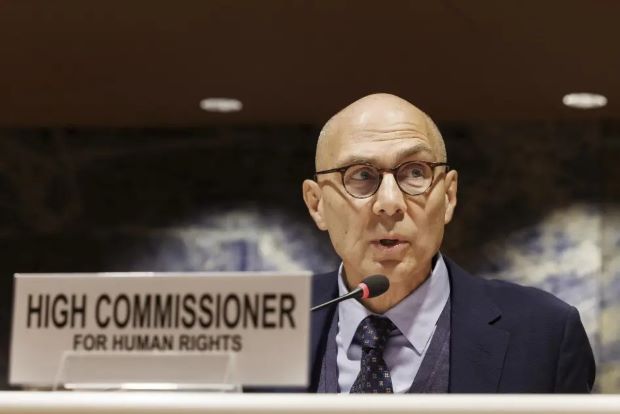
COLOMBO – The United Nations has urged Sri Lanka to accelerate accountability and reconciliation efforts, warning that continued use of the Prevention of Terrorism Act (PTA), alleged state surveillance and unresolved cases of torture, enforced disappearances, and conflict-era abuses risk undermining progress towards ending decades of impunity.
In a report published Thursday (3), covering the period from October 2025 to July 2026, the UN Human Rights Office acknowledged steps taken by the Sri Lankan government to address corruption and pursue investigations into several high-profile cases involving political killings, enforced disappearances and the 2019 Easter Sunday attacks.
However, the report said the government continued to apply the PTA despite pledges to introduce legal and institutional reforms, resulting in arbitrary arrests and prolonged detention without charge.
It also raised concerns over alleged surveillance of civil society actors, activists and journalists, as well as continuing tensions surrounding land and religious sites.
“This government still has an opportunity to turn the tide on decades of abuse of executive power, repressive laws and custodial violence, and entrenched impunity,” UN High Commissioner for Human Rights Volker Türk said.
“While it is encouraging that the Sri Lankan authorities have taken action to address corruption cases and some crimes linked to the post-war period, more needs to be done to end the long legacy of impunity in the country,” he noted.
The report highlighted continuing allegations of torture and deaths in custody. The Human Rights Commission of Sri Lanka recorded 602 cases of torture and ill-treatment in 2025 and a further 138 cases by April 2026.
It also recorded 18 deaths in custody in 2025 and another three by April this year.
The report referred to the death of a 40-year-old inmate at Welikada Prison in Colombo on May 3, who had been detained over a minor drug-related offence and allegedly died after suffering severe beatings.
It also highlighted the violent unrest at Negombo Prison in July, which resulted in at least 32 deaths, saying the incident underscored the urgent need for prison reforms to address systemic problems, including severe overcrowding.
The UN Human Rights Office said it had received at least 16 allegations of surveillance involving civil society actors, activists and journalists.
The information, it said, indicated “a clear and continuing pattern of state surveillance, intimidation and reprisals” by military and intelligence officials, including officers attached to the Criminal Investigation Department and Terrorism Investigation Division.
The report said individuals had repeatedly been questioned about their travel, particularly visits to Geneva and engagement with UN human rights mechanisms, as well as their organizational affiliations, sources of funding and participation in protests or commemorative events.
While noting the government’s continued condemnation of racism and promotion of national unity, the report warned that efforts to establish truth and justice could lose momentum unless concrete action is taken.
It said failures to effectively investigate and prosecute alleged crimes under international law committed during Sri Lanka’s armed conflict continued.
“It is crucial that there is decisive and meaningful action toward accountability for crimes and violations by all parties during the more than two-decade armed conflict,” Türk said.
The High Commissioner welcomed the Attorney-General’s recent decision to indict former Eastern Province Chief Minister Sivanesathurai Chandrakathan, also known as Pillayan, and three others over the alleged abduction and murder of former Eastern University Vice Chancellor Professor Subramanian Ravindranath in 2006.
However, he said many other emblematic cases remained stalled for years, including the killing of 17 Action Contre La Faim aid workers in Muttur two decades ago.
Türk called for meaningful steps to resolve such longstanding cases and urged the government to intensify its reconciliation and accountability efforts.
He called for a moratorium on the use of the PTA pending its repeal and urged the release of long-term detainees held under the law.
He also called for individuals credibly accused of human rights violations to be excluded from senior positions in government, the security sector and diplomatic service until the allegations against them have been genuinely addressed and resolved.
The High Commissioner further urged the government to support victims’ memorialisation initiatives and facilitate the release of lands currently occupied by the military.
–ENCL

Comments are closed, but trackbacks and pingbacks are open.