

US launches dengue response support program in Sri Lanka

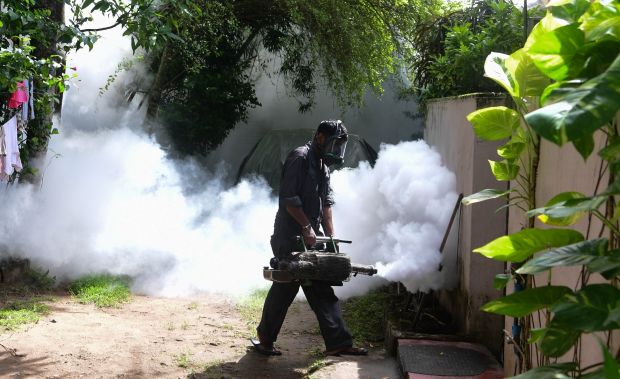
COLOMBO – The US Embassy in Sri Lanka has launched a Public Health Pest Control and Vector-Borne Disease Response program in partnership with the Ministry of Health and the National Dengue Control Unit (NDCU) to strengthen Sri Lanka’s capacity to prevent, detect and respond to dengue amid the country’s ongoing outbreak.
The initiative is funded through the US Department of Defence’s Overseas Humanitarian, Disaster, and Civic Aid (OHDACA) program and brings together experts from the US Army Pacific (USARPAC) and the US Army’s 18th Theatre Medical Command with officials from Sri Lanka’s Ministry of Health.
The program focuses on sharing expertise in preventive medicine, disease surveillance, entomology and integrated vector management to enhance Sri Lanka’s dengue response.
Conducted in Colombo, the initiative is expected to complement the country’s ongoing efforts to eliminate mosquito breeding sites, strengthen public awareness campaigns and improve predictive disease prevention strategies.
US Chargé d’Affaires ad interim Jayne Howell said dengue continues to pose a serious threat to families and communities across Sri Lanka.
“Through this partnership, the United States is sharing American expertise in preventive medicine, entomology, disease surveillance and vector control. This will strengthen Sri Lanka’s response to today’s outbreak while building sustainable capabilities that will protect Sri Lankan communities for years to come,” Howell said.
The US Embassy said the program reflects the broader US-Sri Lanka partnership aimed at promoting security, resilience and disaster preparedness through military-to-military cooperation.
The collaboration includes joint exercises such as CARAT and Atlas Angel, as well as an ongoing training partnership with the Montana National Guard.
According to the Embassy, the partnership seeks to strengthen Sri Lanka’s ability to respond to a range of shared challenges, including natural disasters, humanitarian emergencies and public health threats such as dengue, while contributing to regional resilience in the Indo-Pacific.
-ENCL

Comments are closed, but trackbacks and pingbacks are open.