


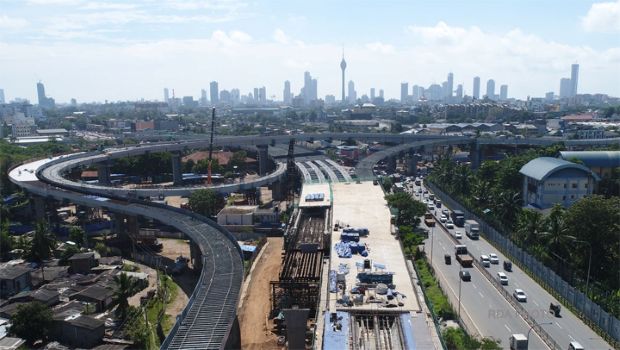
COLOMBO – Sri Lanka’s government on Wednesday (17) reviewed the implementation of key budget projects amid sluggish capital spending, after utilizing only 17.4% of the Rs 1.38 trillion allocated for development expenditure in 2026.
The high-level review meeting, chaired by Secretary to the President Nandika Sanath Kumanayake at the Presidential Secretariat, examined the progress of ministry-level projects and policy initiatives outlined in the 2026 Budget and identified measures needed to accelerate implementation.
According to Finance Ministry officials, only about Rs 240 billion of the Rs 1,380 billion allocated for capital expenditure this year had been spent by mid-year, raising concerns over delays in the execution of development projects.
In a statement issued on Thursday (18), the President’s Media Division (PMD) said the meeting focused extensively on challenges affecting project implementation and the urgent interventions required to overcome them.
The progress of projects under several ministries was reviewed individually, with officials assessing existing bottlenecks and discussing strategies to improve implementation.
Addressing the meeting, Kumanayake emphasized the importance of all relevant institutions working together to resolve outstanding issues without delay.
“He also stressed that expediting the implementation of these projects and ensuring that the public receives their intended benefits is a collective responsibility,” the PMD said.
Deputy Minister of Finance and Planning Anil Jayantha Fernando acknowledged that delays had occurred in some sectors, particularly in procurement processes, but expressed confidence that spending would accelerate in the coming months.
“In certain areas, there are some delays in the procurement, and now we’ll try our level best to expedite and achieve the targets by the year-end,” Fernando told reporters.
He said procurement timelines varied depending on the complexity and technical requirements of individual projects.
“Certain procurements can be completed within one or two months, while others take several months. Therefore, capital expenditure cannot be assessed through a simple arithmetic model,” he said.
Fernando also noted that government capital spending traditionally increases during the latter part of the year and said authorities were committed to maximizing development expenditure and achieving a strong level of project implementation by the end of 2026.
The government has identified public investment as a key driver of economic growth as Sri Lanka continues its recovery from the economic crisis, with infrastructure, digital transformation and public service development among the priorities outlined in the 2026 Budget.
-EN/ENCL

Comments are closed, but trackbacks and pingbacks are open.