


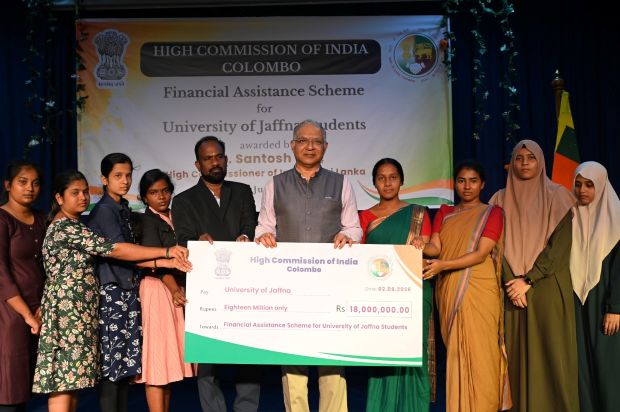
COLOMBO – India has expanded its scholarship program for economically disadvantaged students at the University of Jaffna, increasing monthly financial assistance and extending support to a larger number of undergraduates under a grant-funded initiative.
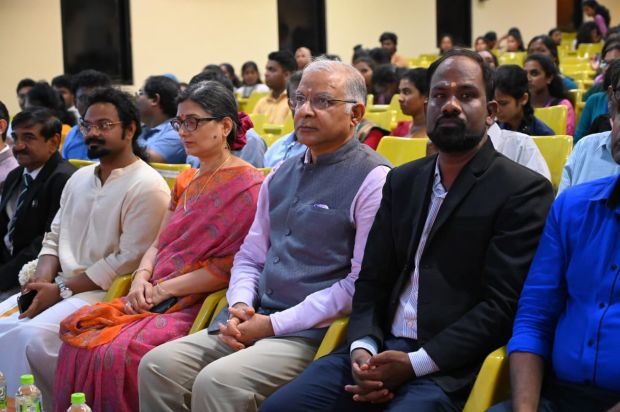
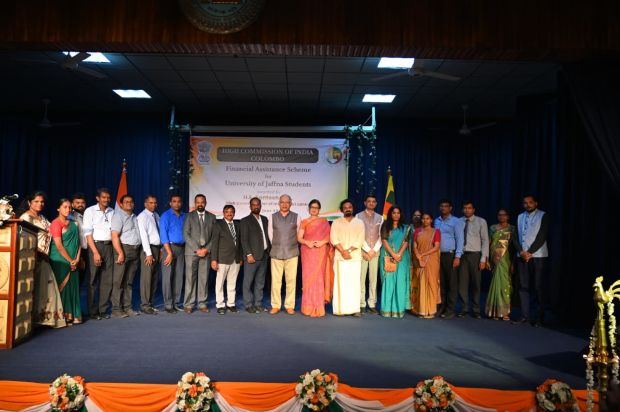
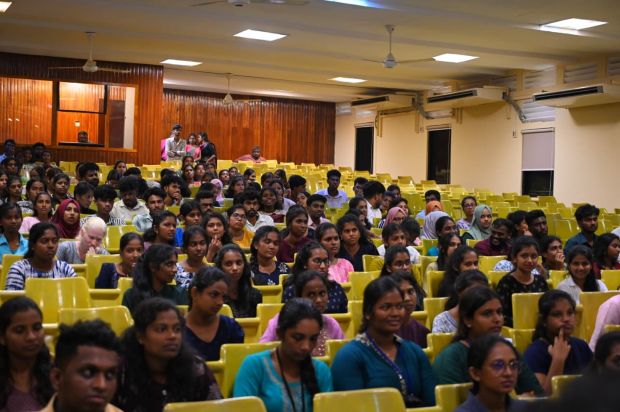
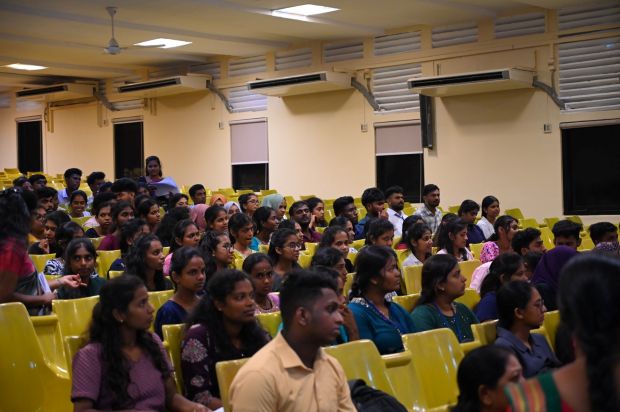
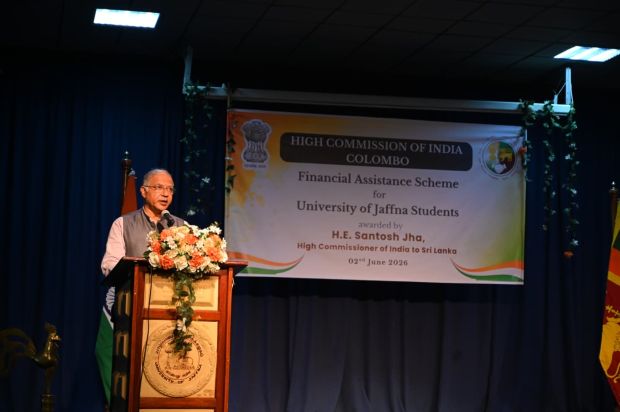
Indian High Commissioner to Sri Lanka Santosh Jha formally distributed the enhanced financial assistance to selected students at a ceremony held at the University of Jaffna on Tuesday (2).
The expanded program follows the success of an earlier scholarship scheme launched during the 2023–24 academic year, under which 100 students from low-income backgrounds received a monthly stipend of Rs 5,000 based on academic merit and financial need.
Building on positive feedback from students and university authorities, Indian Prime Minister Narendra Modi announced during President Anura Kumara Dissanayake’s state visit to India in December 2024 that the program would be strengthened and extended to students at both the University of Jaffna and the Eastern University.
Under the enhanced scheme, introduced from the 2025–26 academic year, 100 first-year undergraduate students will receive a monthly allowance of Rs 7,500 throughout the duration of their degree programs.
As new batches are added annually, the number of beneficiaries at the University of Jaffna is expected to reach 400 students by the fourth year of implementation.
Addressing the event, High Commissioner Jha said the financial assistance was intended to ease economic burdens on students and enable them to focus on their education and future aspirations.
He noted that investment in education remained a key pillar of India’s development partnership with Sri Lanka.
The scholarship initiative forms part of a broader portfolio of Indian-supported education projects across the island. These include the construction of the Rabindranath Tagore Memorial Auditorium at the University of Ruhuna, renovation of more than 79 schools in the Northern Province, the supply of 110 buses to educational institutions, and the establishment of smart classrooms and computer laboratories in 200 schools in the Southern Province.
India has also supported the construction of a multi-ethnic trilingual school in Polonnaruwa and is currently implementing projects to upgrade plantation schools and establish smart classrooms in the estate sector educational institutions.
-ENCL

Comments are closed, but trackbacks and pingbacks are open.