

The death of a CEO

By Kassapa
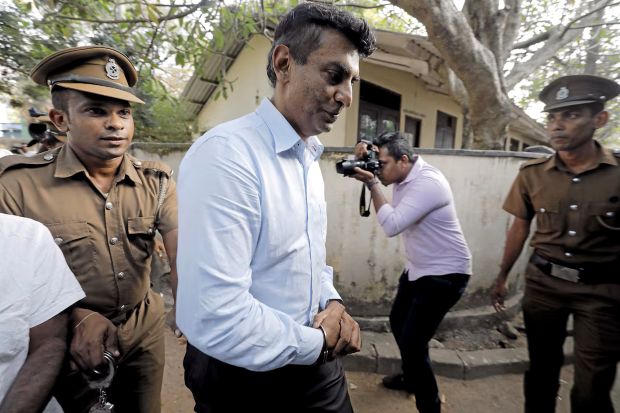
Kapila Chandrasena, former Chief Executive Officer (CEO) of Sri Lankan Airlines and a key suspect in the Airbus bribery scandal, was found dead, just days after being granted bail. In a turn of events that would make crime writers envious, his body was discovered at the home of legendary cricketer Aravinda De Silva, to whom he is related by marriage. To add a further twist to the plot, the sureties who signed bail for Chandrasena were not known to him.
The entire drama is now under investigation. The probe has significant political connotations. Chandrasena was CEO of the national carrier during the Mahinda Rajapaksa presidency. The bribery case against him has already been proved in the British Crown Court in 2020 because Airbus admitted to offering bribes in five countries- Malaysia, Sri Lanka, Taiwan, Indonesia and Ghana- and said they were accepted. They paid a record fine of a staggering 3.6 billion Euros.
When that case hit the headlines in Sri Lanka shortly after the verdict in the British court, an investigation began. By then, Gotabaya Rajapaksa was President, and the probe inched forward at snail’s pace. Chandrasena and his wife, Priyanka Wijenayaka, to whose accounts an amount of US$ 2 million was transferred, were remanded and released on bail shortly afterwards. Ironically, the magistrate granting them bail at that time was Ranga Dissanayake, who is now Director General of the Commission Investigating Allegations of Bribery or Corruption (CIABOC).
The stalled inquiry gathered momentum after the National People’s Power (NPP) government took office. Chandrasena was remanded in March while his wife, also a suspect in the case, remained overseas, citing threats to her safety if she were to return. Also named as a suspect was Shamindra Rajapaksa, the younger son of Chamal Rajapaksa, who is also overseas.
The plot thickened only thereafter. In custody, Chandrasena, under interrogation by investigators, reportedly offered to reveal all details related to Airbus payments in return for turning state witness. It is reported that he was then taken to meet CIABOC Director General Dissanayake, who declined the offer but advised him to “tell the truth”. It was also reported that investigators have in their possession a copy of an unsigned affidavit by Chandrasena, which he was offering.
However, Chandrasena quickly changed his tune. He claimed that he was forced into stating that he made three payments of Rs 20 million each in cash to former President Mahinda Rajapaksa. This time, he submitted a signed affidavit to that effect. In this affidavit, he claimed that Dissanayake reminded him of the fate that befell a witness in another bribery case involving Keheliya Rambukwella. That person committed suicide in the midst of legal proceedings.
Despite this controversy over affidavits, Chandrasena was granted bail last week. A day later, it emerged that his sureties were not persons known to him. A court order was issued to re-arrest him. The following morning, he was found dead. The latest development is that an aide to Aravinda De Silva has also been taken into custody for facilitating the ‘unknown’ sureties.
Obviously, many baffling questions remain. The scene where Chandrasena’s body was found suggests a suicide, but considering the exceptionally murky circumstances involved, the circumstances of his death are still under investigation. The most pressing question is why Chandrasena’s sureties were unknown persons when Aravinda de Silva stated at the inquest that he had arranged for two other known persons to be the sureties. Who made the switch and why?
Besides the scandalous, whodunnit nature of this death, the underlying greater issue is Chandrasena’s fate, regardless of whether it was an accident, suicide or murder. There is convincing evidence to believe that he was only the middleman, a pawn in a larger game of power politics where millions of dollars exchange hands in return for deals with the state. This is what the Airbus company has already acknowledged, accepting a hefty fine in return. There is also no evidence that Chandrasena pocketed that entire sum of money for himself, although the funds were initially credited into the account of a company listed under his wife’s name.
In corporate circles, Chandrasena is described as an efficient and well-liked person and a go-getter. It was probably these same qualities that led him to be ‘head hunted’ by the powers that be at the time to be appointed as CEO of Sri Lankan Airlines. There is nothing wrong with that.
Where he crossed the line was when he was required to undertake obviously illegal transactions, quite likely with some reward for himself as well. He obliged, little knowing that he was exposing himself to litigation because much of the paper trail appears to end with him. The crucial link, connecting him to his political paymasters, is either missing or maybe even non-existent. This is why Mahinda Rajapaksa, surrounded by an unruly mob, triumphantly visited the offices of CIABOC this week, provided a statement and returned unscathed, without being detained.
Chandrasena is not the first victim of this practice of obeying politicians without resisting them. Lalith Weeratunga, Rajapaksa’s secretary, until then a reputed administrative officer, spent time behind bars. Saman Ekanayake, secretary to Ranil Wickremesinghe, is experiencing anxious moments now over authorizing payments for the latter’s travel to Britain for allegedly private purposes.
Corruption has been rampant in Sri Lanka for many decades. During that time, it has also grown exponentially. What is new is that it has become increasingly sophisticated, with politicians taking care to cover their tracks, leaving public servants and other officials exposed when a fraud is discovered. We do not as yet know whether even the recent suicide of a Treasury official falls into this category.
Kapila Chandrasena may not have been a paragon of virtue. Nevertheless, he met an end that no one deserves. His wife and children, domiciled overseas now, were unable to attend his funeral. As much as it is tragic, this must act as a sobering thought for those who believe that their path to quick riches lies with politicians. When the going gets tough, they get going, leaving those left behind to face the consequences. That is the moral of Chandrasena’s story.
-This article was originally featured on counterpoint.lk

Comments are closed, but trackbacks and pingbacks are open.