

Sri Lanka may need 18th IMF program amid mounting external shocks, economist warns

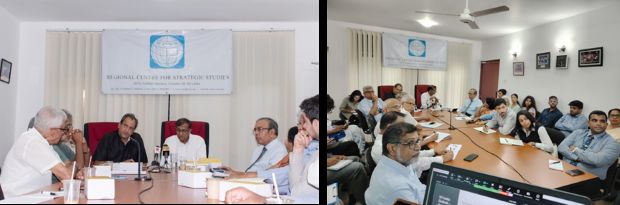
COLOMBO – Sri Lanka may have to seek an 18th program with the International Monetary Fund (IMF) as mounting external shocks threaten to undermine the country’s fragile economic recovery ahead of major debt repayments due from 2028, economist Dr Ganeshan Wignaraja has warned.
The warning was made during the fourth Strategic Dialogue organized by the Regional Centre for Strategic Studies (RCSS), which has now published a comprehensive report capturing the key perspectives and policy concerns raised during the discussion.
Addressing the dialogue on the theme ‘A Global Economy in the Shadow of Middle-East War: Implications for Sri Lanka’s Debt Recovery’, Dr Wignaraja said the combined economic impact of Cyclone Ditwah and the ongoing conflict in the Middle East had compounded Sri Lanka’s vulnerabilities by narrowing fiscal and external buffers at a critical stage of the country’s recovery.
The discussion, moderated by RCSS Executive Director Ravinatha Aryasinha, brought together senior serving and retired policymakers, diplomats, academics, defence officials, civil society representatives, business leaders and members of the media.
Dr Wignaraja, a Visiting Senior Research Fellow at ODI Global in London and Professorial Fellow at Gateway House in Mumbai, said that with Sri Lanka’s current IMF program ending in mid-2027 and significant debt servicing obligations resuming the following year, preparations for another IMF arrangement may become unavoidable.
“What was once viewed as a contingency is increasingly becoming inevitable,” he said, arguing that planning for such a scenario would be the “responsible course of action”.
He noted that Sri Lanka, once presented by the IMF as a “poster child” for post-crisis stabilization following the 2022 economic collapse, now faces renewed pressures from rising oil, gas and fertilizer prices, disruptions to remittances, airline and tourism setbacks, and declining exports linked to instability in the Middle East.
Sri Lanka’s tea exports have been particularly affected, with around 20% traditionally destined for Middle Eastern markets, he said.
Drawing on the IMF’s April 2026 World Economic Outlook, Dr Wignaraja said global growth is projected to slow to 3.1% in 2026 amid rising geopolitical fragmentation, prolonged conflicts and renewed trade tensions, conditions that disproportionately affect emerging and developing economies.
Despite the immediate challenges, he said the changing geopolitical landscape could also create long-term opportunities for Sri Lanka.
“As Gulf states lose their traditional safe-haven status, Sri Lanka could position itself as an Indian Ocean hub for maritime trade, aviation, finance and professional services, provided the right regulatory, governance and infrastructure reforms are implemented,” he said.
Dr Wignaraja outlined two near-term economic scenarios for Sri Lanka.
Under a best-case scenario, the Strait of Hormuz would remain open, oil prices would stay between 78 and 90 US dollars per barrel, inflation would remain relatively contained and economic growth could stay within the 2.7 to 4% range.
However, under what he described as the more likely moderate scenario, continued instability in the Middle East could push oil prices above 100 dollars per barrel, drive inflation up to between 5.6 and 6.3%, slow growth to between 2.4 and 3.5%, increase poverty and place greater strain on public finances.
He warned that Sri Lanka appeared to be moving towards the moderate scenario, while cautioning that a prolonged Middle East conflict could produce even more severe consequences.
Participants in the dialogue questioned whether Sri Lanka had undertaken sufficient reforms since the 2022 crisis to avoid another IMF programme and raised concerns over the country’s continuing structural weaknesses, governance setbacks, reserve inadequacy and overdependence on the Middle East region.
Some participants also argued that South Asian countries more broadly remained vulnerable to disruptions in Middle Eastern trade and energy routes, highlighting the need for greater economic resilience and diversification.
Responding to questions, Dr Wignaraja defended the IMF’s role, stating that in 2022, Sri Lanka had effectively exhausted all alternatives after running out of foreign reserves.
“The IMF was the only lifeline available,” he said, adding that without IMF support the country would have faced far deeper economic insecurity and social hardship.
He argued that Sri Lanka’s deeper problem lay in chronic policy non-implementation, weak state institutions and the absence of long-term strategic decision-making.
Dr Wignaraja also warned that governance failures, including the recent Treasury cyber breach and a major banking fraud case, risk undermining investor confidence and creditor trust at a time when Sri Lanka is seeking to restore economic credibility.
Launched in November 2025, the RCSS Strategic Dialogue series serves as a platform for policy discussions on major global and regional developments. Previous sessions have focused on research priorities for the Global South, US-China relations and the role of media in South Asia.
-ENCL

Comments are closed, but trackbacks and pingbacks are open.