


The deaths of corruption suspects in Sri Lanka raise questions the state cannot afford to leave unanswered
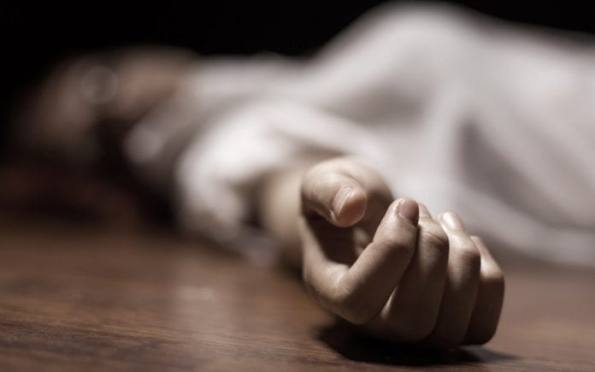
The facts, as officially presented, are straightforward enough. Kapila Chandrasena, former CEO of SriLankan Airlines, was found dead at a Kollupitiya residence on the morning after the Colombo Magistrate’s Court issued a warrant for his re-arrest, a warrant triggered by allegations that he had paid two individuals Rs 15,000 each to stand as bail sureties, effectively gaming the system that had just freed him. Police say it was a suicide by hanging. Case noted, inquiry conducted, body referred to the Judicial Medical Officer.
And yet, for a significant portion of the Sri Lankan public, the official version has barely registered. What has registered is the pattern.
Chandrasena is not the first high-profile figure entangled in a corruption investigation to die under circumstances officially ruled as self-inflicted. Ranga Rajapaksha, the Acting Director of the Department of External Resources at the Ministry of Finance, suspended in connection with the alleged cyber theft of US$2.5 million from the Treasury, was found dead behind his home in Kuliyapitiya shortly after giving statements to the Criminal Investigation Department (CID) on three separate occasions. He was 50 years old and the father of two children. Police again said suicide. The public again asked questions that no official has adequately answered.
When a pattern repeats itself, it stops being a coincidence. It becomes a question of institutional credibility.
In the absence of transparent, independent investigations, conspiracy theories are not a sign of public irrationality. They are a rational response to informational vacuums. When institutions that are supposed to provide answers have themselves been implicated, directly or by association, in the very corruption being investigated, citizens lose the presumption that official conclusions are truthful.
The theories circulating in Sri Lanka’s social media landscape and in hushed conversations range in specificity. The most common: that individuals who know too much about networks of corruption that extend far beyond themselves become liabilities the moment they are caught. A man facing prison has little incentive to protect those who benefited alongside him. A man who is dead has no testimony to give, no plea deal to negotiate, no courtroom cross-examination to survive.
Chandrasena’s case lends itself particularly to this reading. He was accused of conspiring to receive a bribe of US$16 million in connection with SriLankan Airlines’ 2013 deal to purchase 10 Airbus aircraft worth US$2.3 billion. He allegedly created a shell company in Brunei under his wife’s name and routed €1.45 million in kickbacks through a Singapore bank account. Corruption of this magnitude does not exist in isolation. It involves approvals, oversight failures, and the active or passive complicity of others in positions of power. Chandrasena, alive and cornered, represented a thread that, if pulled, might have unravelled something much larger.
That he is now dead, two days after being released on bail and hours before being re-arrested, is a sequence of events that demands more than a medical examiner’s report and a closed file.
To be clear: none of this is to assert that foul play has been proven, or that the official explanations are necessarily false. Individuals facing disgrace, criminal proceedings, and the collapse of a carefully constructed life do, tragically, sometimes choose to end it. The psychological weight of public exposure, legal jeopardy, and the loss of status can be catastrophic. Suicide in such circumstances is not beyond understanding.
But ‘not beyond understanding’ is not the same as ‘beyond scrutiny’. And that scrutiny must be rigorous, visible, and independent, especially when the state itself is a party to the investigation.
Trust in democratic institutions is not a resource that replenishes itself automatically. It is built slowly, through demonstrated accountability, and destroyed quickly, through perceived impunity. Sri Lanka is a country with a long and well-documented history of unresolved political deaths, shelved investigations, and corruption cases that somehow never reach their final verdict against the most powerful of the accused.
Each death like Chandrasena’s or Rajapaksha’s does not exist in isolation in the public mind. It lands on top of accumulated grievances, of watching cases drag on for years, of bail conditions being manipulated by those with resources, of investigations that mysteriously stall when they approach powerful circles. The cumulative effect is a public that does not believe the system works for them, and increasingly suspects it may actively work against justice.
This erosion of trust is not merely a sociological footnote. It has direct consequences for the functioning of democracy. When people do not trust that the law applies equally, that it will catch the powerful and hold them accountable as it holds ordinary citizens, they disengage from civic processes, they seek protection through patronage rather than rights, and they grow susceptible to populist narratives that bypass institutions entirely. The death of public trust in the rule of law is not an abstract loss. It is the precondition for democratic backsliding.
There is a dimension to these deaths that has received insufficient attention: the government’s direct responsibility for the safety and security of individuals who are in its custody, on its bail conditions, or under its active investigation.
This is not a courtesy. It is a legal and moral obligation that flows from the state’s monopoly on the use of force and its authority to deprive individuals of liberty. When the state arrests someone, charges them, releases them on bail, and then issues a fresh warrant for their re-arrest, as happened in the Chandrasena case that individual is, for all practical purposes, a ward of the justice system. Their physical safety during that process is the state’s responsibility.
This means, at minimum, that individuals at high legal risk, particularly those whose testimony may implicate powerful interests, should be subject to active welfare checks, monitored under conditions that reduce vulnerability, and offered access to mental health support. The current approach appears to be: release on bail, issue a warrant when bail conditions are violated, and learn of the suspect’s death from a police report.
That is not a system designed to protect anyone. It is a system designed to process paperwork.
The government’s response to these deaths cannot be limited to closing the file and moving on. What is required is an independent inquiry into the circumstances of each death, one conducted not by the same institutions whose integrity is already in question, but by a body with genuine independence and a public mandate. Post-mortem findings should be published in full. Digital and physical records surrounding the final hours of these individuals should be preserved and scrutinized.
More broadly, Sri Lanka must confront the structural question: why do corruption investigations of this scale so frequently fail to produce convictions of the most powerful actors? Why do witnesses disappear, cases stall, and accused figures die before they can speak in open court? These are not questions about individual tragedies. They are questions about a system that appears, with troubling regularity, to protect those at the top of corruption chains while consuming those at the bottom.
A democracy that cannot guarantee the safety of those it investigates, or the integrity of its judicial proceedings, is not yet the rule-of-law state it aspires to be. The deaths of Kapila Chandrasena and Ranga Rajapaksha may, officially, be tragedies. But the failure to investigate them rigorously and transparently would be something worse: a choice.
-ENCL

Comments are closed, but trackbacks and pingbacks are open.