

Why Aragalaya 2 is not likely

By Kassapa
It is, in many ways, crunch time for the National Peoples’ Power (NPP) government. Elected on a platform of clean government and a host of promises based on the slogan ‘A Thriving Nation, A Beautiful Life’ (or ‘Pohosath Ratak, Lassana Jeevithayak’) that envisioned economic deliverance to a long-suffering nation, it now has to deal with a strikingly different scenario: queues for fuel, rationing through a QR code and other such measures as being able to purchase the precious commodity depending on the number on your National Identity Card.
For many, there is a sense of déjà vu because 2022 is not that long ago. At that time, queues for gas and power cuts that were several hours long were also the order of the day. Soon, these may become a reality too if the conflict in the Middle East extends beyond the breaking point.
The opposition is not unhappy. It is the recipe for the perfect storm: a disgruntled public, shortages of critical items and services and a government which has proved that it is not as efficient in governance as it was in making promises while it was in the opposition. Some not-so-enlightened members of the opposition are openly calling for the NPP to hand over the reins of government to ‘someone who can get the job done’. Some have even gone to the extent of mentioning Ranil Wickremsinghe, notwithstanding the fact that the gentleman is recuperating in a hospital bed somewhere in Singapore!
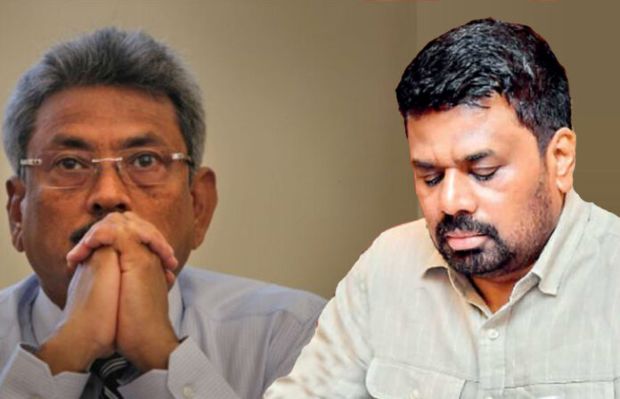
A comparison between 2022 and now is inevitable. There are similarities as well as differences. In 2022, there was an excuse: the Covid pandemic that engulfed and crippled the world. There certainly was an effect on the economy due to that. Every activity came to a standstill because the country was shut down. Former President Gotabaya Rajapaksa took great pride in how he dealt with it, saying that immortal line, ‘api thamai hondatama karey’ (‘we did it best’). His defence was that he prioritized human lives over the economy. Lives lost, he said, can never be recovered, whereas an economy could. Rajapaksa’s blunder was that the latter never happened.
The public- and the Supreme Court- didn’t pardon Rajapaksa because of Covid. That is because of two reasons. Firstly, as the ever-astute Anura Kumara Dissanayake pointed out at a recent media briefing, all countries in the world suffered from the Covid pandemic; no country was exempt. Yet not all countries went into an economic crisis due to a depletion of their foreign exchange reserves that led to shortages of essential items and services.
Secondly, there were grumblings about corruption, nepotism, abuse of power and the erosion of law and order on a massive scale under the Rajapaksas. The examples are well documented and too numerous to mention here. The country had become an oligarchy, not a democracy. Any goodwill that Mahinda Rajapaksa had generated by winning the war against the Tamil Tigers had long gone. Any confidence that Gotabaya Rajapaksa had instilled after the Easter terror attacks had evaporated. The stage was set for an uprising. Almost everyone wanted a ‘system change’.
That is why the ‘aragalaya’ happened. Moreover, it would be fair to say that the ‘aragalaya’ is the reason why the NPP is in power today because, if one asks the reverse question, if not for the ‘aragalaya’, would the NPP be governing now, the answer would be, certainly not. It would probably be languishing in the opposition with a single-digit percentage of votes.
Now, too, the government has an excuse: the Gulf War. Just like the Covid pandemic, if it drags on for long enough and oil prices rise sky high, leading to spiralling inflation and shortages of fuel, no country will be exempt from its ripple effect. Sri Lanka will be especially vulnerable because of the brittle state of its economy, having just recovered from its worst economic crisis and then being battered and bruised, first by tariffs imposed by the United States, then by Cyclone Ditwah, which carried a massive repair bill and now the Gulf war, all within the span of the NPP’s short tenure in government.
However, just as with COVID, not all economies will collapse. Some simply have better reserves that they can dip into in a crisis. Others will be better at managing the crisis than we. The question is, can Dissanayake and his NPP government emerge from this crisis unscathed?
Several factors work in his favour. This government has been in office for less than two years. There is no massive public resentment against it. The general perception of the public is that the government is doing everything it can under difficult circumstances. The public is tolerant and is willing to wait, at least for now.
One of the main reasons for this is that there are no major allegations of corruption, and there is no palpable evidence of NPP politicians living in the lap of luxury since they came into power. The public feels that they are as much affected as the people themselves.
One must add a note of caution here, though. Energy Minister Kumara Jayakody has been indicted on corruption charges in the Colombo High Court. Asked about this, Dissanayake’s defence was that the alleged offence was committed when he was a government official. If he were indicted for an alleged offence when he was a minister, there would be no hesitation in asking him to step down, Dissanayake said. That seems like convoluted logic for a government that promised absolute transparency. Surely, asking Jayakody to step down until his case was heard would have allowed the government to take the moral high ground.
Nevertheless, there is also the Dissanayake factor. While many have lowered their expectations of the NPP ushering in a brave new world where Lankans will enjoy a ‘thriving nation and a beautiful life’, Dissanayake still enjoys a considerable measure of support from the masses. They believe in his sincerity and commitment and have been impressed by his style of no-frills governance without the usual razzmatazz that accompanies a Head of State.
Overall, then, the recipe for ‘Aragalaya 2’ lacks a few ingredients. Also missing is a vibrant opposition that the public can see as an alternative to the NPP. If anything, this last reason might be the most compelling for a second uprising not happening, at least in the foreseeable future.
– counterpoint.lk

Comments are closed, but trackbacks and pingbacks are open.