

No safe corner: Women’s safety in the Cyclone Ditwah displacement camps

By Maheswary Vijayananthan
COLOMBO – “Aiyo, Miss, we faced huge problems because of alcohol in the camp. We couldn’t even study peacefully. Illegal liquor was being produced right there among us. Family fights increased. It was women and students like me who suffered the most.”
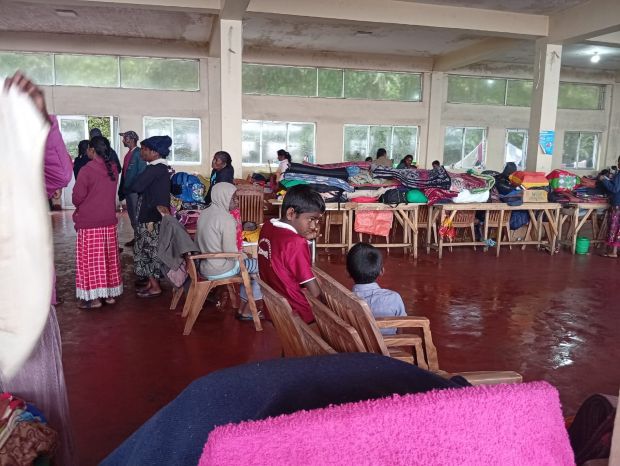
These are the words of a 17-year-old girl displaced by Cyclone Ditwah, which devastated large parts of Sri Lanka on November 27, 2025. She was among more than 300 people from 85 families sheltered in a school turned temporary camp in the Nuwara Eliya district. She spoke quietly, choosing her words carefully, as though still afraid of being overheard.
Her story is not exceptional. It is the norm.
Cyclone Ditwah was one of the most destructive natural disasters to hit Sri Lanka in recent memory. The Central Bank of Sri Lanka estimated direct damage at US$ 1.4 billion. The Ministry of Agriculture reported the destruction of 108,000 hectares of paddy fields, 11,000 hectares of other crops, and 6,143 vegetable plots, while tea production fell by 35%, a devastating blow to an upcountry economy already stretched thin.
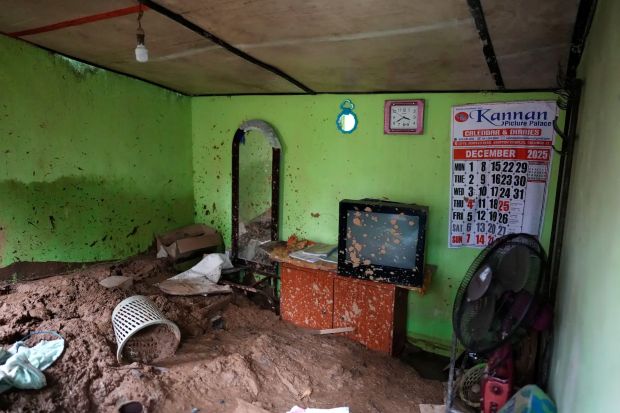
UNDP confirmed that more than two million people were affected, nearly half of them women. UNFPA’s figures are more precise: of those affected, 1,520,550 are women; 22,570 are pregnant; 193,770 are elderly. These are not abstractions. They are mothers, daughters, grandmothers, and adolescent girls who found themselves, through no fault of their own, sleeping on classroom floors alongside strangers, sharing a single overflowing latrine, breastfeeding in public because there was nowhere else to go.
Three months on, 85 camps remain operational across the country, sheltering 6,650 people. A further 165,884 have taken refuge in the homes of relatives. UNFPA notes that displacement is concentrated heavily in plantation areas, communities in the upcountry that, as is so often the case in Sri Lanka, were among the first and hardest hit, and will be among the last to recover.
Hidden Crisis Inside the Camps
In the camps of Nuwara Eliya district, a secondary crisis unfolded largely out of sight. With livelihoods destroyed and futures uncertain, alcohol consumption among men surged. Many spoke openly of drinking to forget. What they left unspoken was what this meant for the women and children around them.
Family violence increased. The noise and chaos made it impossible for children to sleep or study. Couples, their inhibitions loosened by alcohol and the collapse of any private space, behaved intimately in shared open areas, exposing adolescents to experiences they were wholly unprepared for. For young girls already navigating the trauma of displacement, the camp environment offered not refuge, but a new set of fears.
The physical conditions compounded everything. Camps set up in schools and community halls were severely overcrowded. Women lost the most basic dignities of daily life. They shared toilets, sleeping spaces, and bathing areas with strangers. There was nowhere to change clothes, nowhere to breastfeed in privacy, and nowhere, for many, to manage menstruation with any semblance of dignity.
Hundreds of people shared a single toilet. Women developed urinary tract infections, reducing how much water they drank to avoid having to use the facilities at night when safety could not be guaranteed. In at least one camp in the Nuwara Eliya district, a single latrine, cleaned just once a week by estate management, overflowed repeatedly, creating a persistent stench and serious hygiene risks in a community already burdened by pre-existing health vulnerabilities.
Pregnant women fared particularly badly. UNDP reports confirm that 22,570 pregnant women affected by the disaster lacked access to proper health facilities and adequate nutrition during the critical displacement period. Damaged roads made reaching hospitals in time, for routine check-ups, and in emergencies, extremely difficult.
Women in the camps describe spending nights barely sleeping, if at all, alert to sounds, afraid of what darkness might bring. The absence of electricity removed even the most basic deterrent to those who might cause harm.
Rendered visible only as victims
There is a particular cruelty in the way women in disaster settings are seen, and not seen.
At relief distribution points, women, children, and the elderly waited in lines, often for hours. These images spread rapidly on social media, not, in most cases, to demand better systems or hold authorities accountable, but to generate engagement. Women’s suffering became content. Their helplessness, their exhaustion, their grief were packaged and circulated as symbols of pathos, their dignity a secondary concern to the metrics of shares and views.
This is not a new phenomenon. Disasters have long produced this dynamic, women rendered hyper-visible as victims, and simultaneously invisible as leaders, decision-makers, and agents of their own recovery. The camps of Cyclone Ditwah were no different.
It would be wrong to suggest that every camp established after Cyclone Ditwah was unsafe, or that illegal liquor production was universal. It was not. But what has been confirmed, by multiple sources, across multiple locations, is that the safety of women in the majority of these camps was, at best, uncertain.
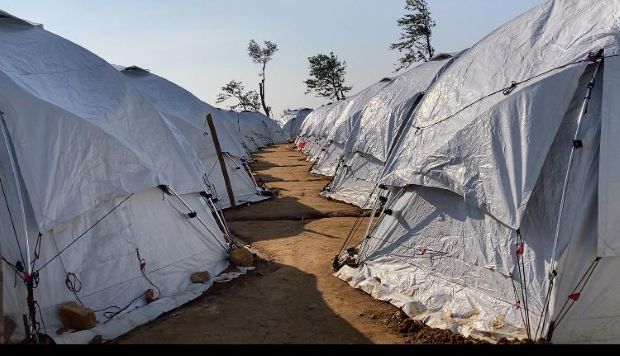
In the Rendapola Hakgala area, more than 100 people who lost their homes are still living in temporary tents, exposed to rain and sun, with no indication of when permanent solutions will come. They have been, largely, forgotten.
The upcountry community, historically the most marginalized, the least resourced, the most overlooked, has once again borne the heaviest burden of a national disaster. And within that community, it is women who have carried the greatest weight, in silence, with the least support.
–Maheswary Vijayananthan is a journalist based in Sri Lanka

Comments are closed, but trackbacks and pingbacks are open.