

From south to north, Sri Lanka’s cricket dreams undermine fragile ecosystems

By Malaka Rodrigo
COLOMBO — Cricket is more than a sport in Sri Lanka. It is woven into the country’s post-independence identity, a unifying passion that cuts across class, ethnicity and geography. Yet in recent years, the push to expand cricket infrastructure has increasingly collided with fragile ecosystems, triggering uncomfortable questions about development priorities, environmental governance and climate resilience.
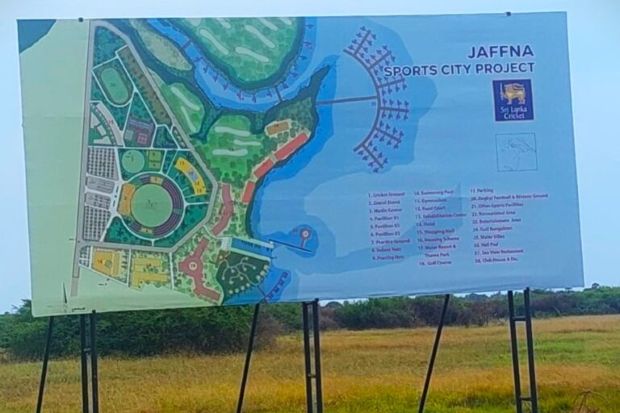
The latest controversy centres on plans to build an international cricket stadium on Mandaitivu, a small island off the Jaffna Peninsula in Sri Lanka’s Northern Province. Environmentalists warn that the proposal threatens a sensitive coastal ecosystem already under pressure from sea-level rise, flooding and postwar development.
In September, President Anura Kumara Dissanayake launched the construction, stating that the Jaffna International Cricket Stadium will not merely be a venue for cricket, but a symbol of national unity.
Prasanna Rodrigo, media spokesperson for Sri Lanka Cricket, confirms a delay in commencing construction due to Cyclone Ditwah but says development work is being carried out as planned to have the project commissioned for international matches by 2027. This international cricket ground is part of Sri Lanka Cricket’s broader initiative to develop a modern sports city in Jaffna covering a total area of 56 hectares (138 acres), Rodrigo told Mongabay.
Mandaitivu is a low-lying island of 7.6 square kilometres (2.9 square miles), rising only about 5 metres (16 feet) above sea level. According to Rakulan Uthayanayaky Kandasamy of the Sri Lanka Environmental Action Network, large-scale landfilling required for construction would destroy the island’s natural water storage capacity, disrupt tidal flows and significantly increase flood risks during monsoons and coastal storms.
Scientific studies confirm that the Jaffna Peninsula lies entirely within 10 km (6 miles) of the coast and has an almost flat topography, with about 50% of the land area less than 2 m (6.6 ft) above sea level, making it highly vulnerable to sea-level rise and coastal hazards.
Kandasamy points to Mannar Island, where parts of the island began flooding even during moderate rainfall following infrastructure developments such as wind farms. “If the construction of the cricket stadium goes ahead as planned, it is inevitable that other parts of Mandaitivu will experience increased flooding,” he said.
Following Cyclone Ditwah in November-December 2025, videos of Mandaitivu residents playing cricket in front of a submerged gate at the proposed stadium site circulated widely on social media, reinforcing concerns about the site’s long-term suitability.
Between 1980 and 2019, the divisional secretariat of the South Velanai area, which includes Mandaitivu, experienced 12 major floods and the second-highest number in Northern Province, says Graham Marshall, president of the Wildlife and Nature Protection Society (WNPS), a prominent local conservation NGO that strongly opposes the initiative. The 2012 floods affected 40,000 people; the 2017 floods impacted 35,000 residents, and the area also faces extreme vulnerability to storm surges and falls within Sri Lanka’s highest wind loading zone, experiencing wind speeds of 49-54 m (160-177 ft) per second, which could impact the sport.
Climate projections also indicate temperature increases of 1.7-2.0° Celsius (3.1-3.6° Fahrenheit) by 2050, with increasing and erratic rainfall intensity. Building a major sports complex in such a disaster-prone location contradicts basic safety planning, Marshall told Mongabay.
“A stadium is important,” Marshall said, “but not inside wetlands, especially when alternative sites are available on the Jaffna mainland,” adds Kandasamy.
Mangroves and livelihoods
Mandaitivu lies within the Jaffna lagoon system, an ecologically rich mosaic of mangroves, seagrass beds, mudflats, salt marshes and coastal wetlands. These ecosystems sustain artisanal fisheries, provide nursery grounds for marine species, attract migratory birds and act as natural buffers against storms and coastal erosion.
Rajendramani Gnaneswaran, a professor at the University of Jaffna, says Mandaitivu’s mangroves are among the least degraded in Northern province, despite increasing human pressure.
“Mangroves in areas such as Thondamanaru and Sarasalai were once rich but are now heavily degraded due to development,” he said. “Mandaitivu still retains relatively healthier mangrove patches, which makes their protection even more important,” Gnaneswaran told Mongabay.
Mangroves are highly sensitive to changes in salinity and hydrology, Gnaneswaran explained. Even seemingly minor infrastructure, such as roads, can fragment habitats and disrupt tidal exchange. The loss of mangroves would also directly affect local fishing communities, particularly through declines in prawns and crabs, which Mandaitivu is known for.
A hotspot of island biodiversity
Sri Lanka has over 100 offshore islands and islets, with nearly half located in the Northern province. According to IUCN Sri Lanka, many of these islands support distinctive terrestrial and marine biodiversity shaped by isolation and lagoonal ecosystems.
Mandaitivu alone hosts several notable species, including two endemics: the lesser albatross butterfly (Appias galene) and Devaka’s fan-throated lizard (Sitana devakai). Surveys have also recorded species listed as nationally critically endangered and vulnerable, underscoring the conservation value of even relatively small islands.
A comprehensive IUCN assessment notes that past infrastructure projects across the Jaffna Peninsula, including roads and barrages, have already disrupted natural water flows, fragmented mangrove habitats and caused a sharp decline in fisheries. In the Thondamanaru lagoon, annual fish catches fell from about 150 metric tons to just 35 metric tons after a barrage was constructed in the 1950s.
Echoes of Hambantota
For many conservationists, Mandaitivu recalls an earlier controversial decision: the construction of the Mahinda Rajapaksa International Cricket Stadium in Sooriyawewa in southern Sri Lanka, built within a key elephant landscape. Elephants were reportedly seen closer to the stadium, and two ground staff were reportedly killed in 2021 by an elephant attack.
From elephant landscapes in the Southern dry zone to low-lying coastal islands in the North, large stadium projects have repeatedly triggered environmental alarm, suggesting a pattern rather than isolated mistakes of ignoring the environment, Marshall added.
Wildlife experts warned at the time that the project would fragment elephant habitat and intensify human-elephant conflict. Over the following years, Hambantota emerged as a hotspot for elephant deaths, while the stadium itself remained largely underused, raising questions about its economic justification alongside its environmental cost.
“The tragedy is that we compromised an elephant landscape for a stadium that delivers little in return,” one senior conservationist said. “Now we risk repeating the same mistake in a different ecosystem.”
Multiple red flags
Environmental organizations including WNPS, argue that the Mandaitivu project also raises serious legal concerns. Under Sri Lanka’s Coast Conservation and Coastal Resource Management Act, any development within the coastal zone requires prior approval and an environmental impact assessment (EIA), Marshall explained.
According to WNPS, no such permits or EIA have been obtained. In a letter to President Dissanayake, the society stressed that it does not oppose a cricket stadium in Jaffna but objects to its placement on Mandaitivu Island and the failure to comply with environmental law, the WNPS president said.
Government planning documents appear to support these concerns. The Greater Jaffna Development Plan (2024-2034) designates Mandaitivu as a ‘high sensitivity’ zone where development should be minimized with a proposed mangrove forest reserve. National and provincial environmental assessments recommend nature-based tourism, not large-scale infrastructure, for the northern islands.
Climate resilience versus concrete
Sri Lanka’s Northern Province was scarred by nearly three decades of violent conflict, as the Liberation Tigers of Tamil Eelam (LTTE) fought to carve out a separate state in the north and east. The guns fell silent in 2009, but even before the war ended, another, quieter threat was already looming. In 2007, then-Intergovernmental Panel on Climate Change (IPCC) Vice Chair Mohan Munasinghe issued a stark warning that while countless lives were being lost due to a prolonged conflict, the land itself was facing greater danger. Climate models showed that sea-level rise could hit northern Sri Lanka harder than almost anywhere else in the country, swallowing vast stretches of territory and reshaping a region already battered by war.
As Sri Lanka grapples with worsening floods, cyclones, droughts and coastal erosion, environmentalists point out that protecting ecosystems such as mangroves and wetlands is one of the most effective forms of climate adaptation.
“Building a stadium on a flood-prone coastal island while talking about climate resilience sends contradictory signals,” said Kandasamy. “Ecosystems like Mandaitivu are part of the country’s natural defence system.”
Critics stress that this debate is not about opposing cricket or sports development. Rather, it is about where development happens, how decisions are made and whether lessons from past mistakes are being learned. From elephant corridors in the south to mangrove-fringed islands in the north, Sri Lanka’s cricket ambitions are testing the balance between national pride and environmental responsibility.
-news.mongabay.com

Comments are closed, but trackbacks and pingbacks are open.