


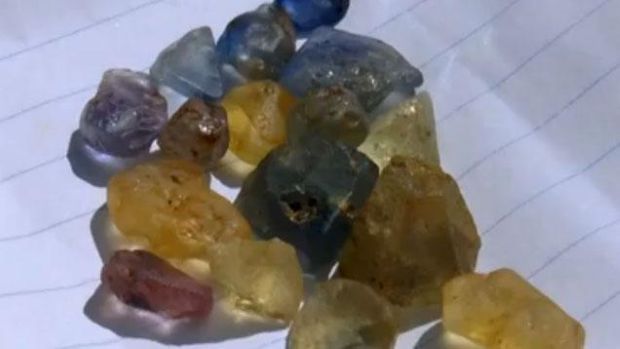
COLOMBO – Sri Lanka is revising the basis for charging value-added tax (VAT) on imported rough stones in a bid to revive its gem cutting and polishing industry, which has seen significant activity shift overseas following recent tax hikes, a senior official said.
The move follows industry concerns that the imposition of 18% VAT and a 2.5% Social Security Contribution Levy (SSCL) on imported rough stones severely undermined the local value-addition sector, prompting businesses to relocate operations to regional hubs such as Thailand, Dubai and Hong Kong.
“We saw the gem industry gradually moving out of Sri Lanka due to comparatively liberal and simplified tax regimes in other countries,” Sri Lanka Gem and Jewellery Authority (SLGJA) Chairman S.P. Chaminda told reporters on Monday (19).
He said the decline in imports had badly affected workers engaged in stone cutting, polishing and heat treatment, particularly in gem centres such as Ratnapura and Beruwala.
Previously, Sri Lanka Customs charged a flat clearance fee of US$200 per parcel of imported rough stones, regardless of weight or value. However, after taxes began to be levied on assessed values following Sri Lanka’s external debt default, import volumes fell sharply, officials said.
Following discussions with the Ministries of Industries and Finance, authorities have now decided to apply VAT and SSCL on a deemed value based on weight, rather than on assessed market value.
Under the revised system, precious stones will carry a deemed value of US$900 per kilogram, while semi-precious stones will be valued at US$50 per kilogram for tax purposes. This would result in a combined VAT and SSCL charge of around LKR 57,200 per kilogram of precious stones and approximately LKR 3,174 per kilogram of semi-precious stones, Chaminda said.
For consignments below one kilogram, taxes will be levied per carat. Precious stones such as rubies, sapphires and emeralds will be charged on a deemed value of US$5 per carat, while semi-precious stones will be charged US$1 per carat.
“So a one-carat precious stone will attract VAT and SSCL on a deemed value of five dollars, amounting to roughly one dollar in taxes,” Chaminda said.
In parallel, Sri Lanka is working to strengthen domestic gem mining while addressing environmental concerns linked to abandoned mines. The SLGJA is also upgrading gem certification laboratories to issue internationally recognised certificates verifying origin and treatment.
“It will certify whether a gem is of Sri Lankan origin and whether it is natural or heat-treated,” Chaminda said.
Authorities are also exploring the establishment of a domestic gold refinery, as high import taxes have constrained gold supplies to the jewellery industry. Industry representatives have warned that current gold taxes of around 45% are making it difficult for businesses to remain viable.
Chaminda said the high tax levels were linked to conditions under Sri Lanka’s ongoing International Monetary Fund (IMF) program, limiting the government’s flexibility to ease them.
Sri Lanka’s gem and jewellery sector has long been a key foreign exchange earner, and officials say the revised tax structure is expected to help restore competitiveness and encourage the return of value addition to the country.
-ENCL

Comments are closed, but trackbacks and pingbacks are open.