

Sri Lanka construction sector seeks 7,500 foreign workers amid growing labour shortage

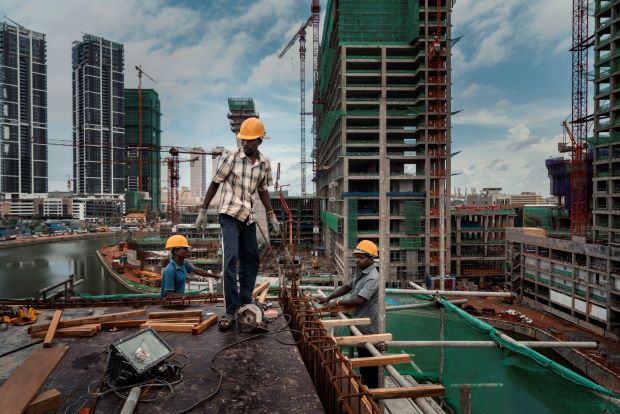
COLOMBO – Sri Lanka’s leading construction companies have requested permission to import around 7,500 foreign workers as the sector faces an acute labour shortage, with a projected deficit of nearly 20,000 workers in 2026, Secretary to the Ministry of Housing and Construction Kumudu Lal Bogahawatta said.
The construction industry currently has an estimated 10,000 unfilled vacancies, officials said, even as activity continues to recover following the country’s economic crisis.
“There are serious human resource problems in the construction industry,” Bogahawatta told reporters in Colombo, attributing the shortage partly to the recent emigration of skilled professionals, including engineers. Although around 1,400 engineers graduate each year, only a small proportion remain in Sri Lanka, he said.
Shortages are also pronounced at the technical level, with a lack of trained construction tradesmen and their assistants across the sector.
Bogahawatta said the industry would require at least 20,000 additional workers this year alone. “If we can connect 20,000 new workers to the industry, it will be a major relief,” he said.
Analysts have noted that demand for labour is likely to rise further as reconstruction work linked to Cyclone Ditwah gathers pace, adding pressure to an already constrained workforce.
According to the ministry, several top construction firms have sought approval to recruit foreign labour, primarily from India, Bangladesh and Nepal. Some foreign workers are already in the country, Bogahawatta noted.
Despite the availability of unemployed youth in rural areas, officials said many are reluctant to take up construction work due to negative perceptions about the industry.
“There is a disconnect,” Bogahawatta acknowledged. “On one hand, there are large numbers of young people in villages waiting for jobs. On the other hand, there are thousands of vacancies in construction.”
He said the government has launched initiatives to address this gap by offering vocational qualifications such as National Vocational Qualification (NVQ) certification, improving job security and professional recognition, and linking trained workers with local construction firms or overseas employment opportunities.
The construction sector has been among the hardest hit during Sri Lanka’s recent economic crises, contracting sharply during periods of currency instability and fiscal tightening. Following steep declines in 2022 and 2023, the sector rebounded strongly in 2024, expanding by 19.4% as economic conditions stabilized.
In the first nine months of 2025, construction activity grew by a further 10.5%, reflecting renewed investment, resumed public projects and improving confidence, officials said.
-ENCL

Comments are closed, but trackbacks and pingbacks are open.