

Cyclone Ditwah and the fiscal reckoning: Why Sri Lanka’s future debt must build in climate flexibility

By Anushka Wijesinha
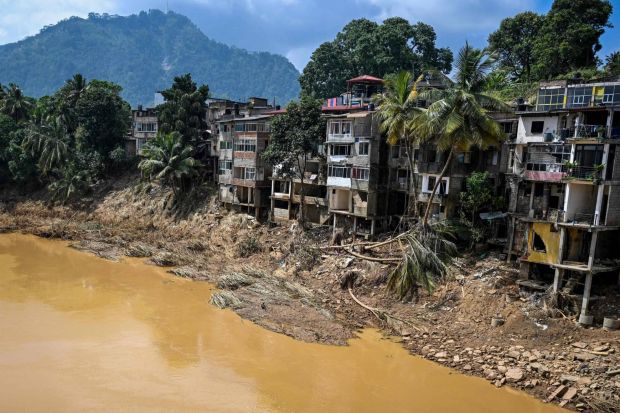
When Cyclone Ditwah tore through Sri Lanka in November 2025, it did more than destroy homes, infrastructure, and livelihoods – it exposed the precarity of Sri Lanka’s economic recovery and hard-won fiscal consolidation. Sri Lanka’s debt restructuring, concluded in late 2024 after the country’s historic 2022 default, came with firm fiscal targets tied to the International Monetary Fund’s (IMF) Extended Fund Facility program – targets premised on macroeconomic stability and steady Gross Domestic Product (GDP) growth to enable principal repayments beginning in 2027. The massive reconstruction needs now facing the nation would necessarily mean re-looking at these. Already, the Parliament passed a LKR 500 Billion (roughly US$1.6 Billion) supplementary budget in its final sitting for the year 2025, on top of the approved Budget for 2026 passed a week earlier. A primary spending target for 2026 (set in the IMF program) is likely to be exceeded, a government minister has noted, but asserted that it will not affect the targets for the years thereafter.
Fiscal Spending for Relief Efforts
The immediate costs of emergency relief, temporary shelter, food distribution, and medical care run into tens of millions of dollars. Medium-term reconstruction of the 16,000 kilometres of damaged roads, 278 kilometres of railway tracks, 480 bridges, and nearly 720,000 affected buildings will require hundreds of millions of dollars. Agricultural losses will impact rural incomes for months. A new FAO report (Dec 17, 2025) notes that, “Farmers’ financial capacity was already severely strained following the prolonged 2019–2024 economic crisis, limiting their ability to replant the lost 2026 main Maha crops and cultivate the forthcoming 2026 Yala season”, and that “Urgent support to affected farmers is required to protect productive capacity and prevent significant agricultural production shortfalls”.
The government is providing cash handouts to affected households to replace damaged assets and rebuild houses. Over 29,000 affected Micro, Small, and Medium-sized Enterprises (MSME) are being provided financial support, including interest-subsidised loans. The cyclone struck regions already weakened by years of economic stress, with over half of the people in flooded areas living in households facing multiple vulnerabilities, including unstable income, high debt, and limited disaster coping capacity, according to a recent United Nations Development Program (UNDP) report.
The fiscal risks from climate impacts were already getting recognized, even prior to this cyclone. An IMF technical assistance report on fiscal risks in Sri Lanka, published in October 2025, had already quantified this vulnerability. Natural disasters currently cost the country 0.5-1% of GDP annually in direct terms, with total economic losses averaging 2.5% of GDP. Once adaptation costs are included, the report projected total future fiscal exposure at 1.6% of GDP annually – roughly US$1.4 billion based on current GDP levels.
Climate Vulnerability as a Debt Sustainability Issue
The IMF report identified multiple transmission channels through which climate events strain fiscal capacity. Direct costs include relief, reconstruction, and compensation payments. State-owned enterprises face losses, particularly Cthe eylon Electricity Board (CEB), when droughts reduce hydropower generation. Tax revenue declines as tourism, crop exports, and agricultural production are disrupted. Cyclone Ditwah has activated all these channels simultaneously. The reconstruction bill alone could easily reach 1-2% of GDP when accounting for both public infrastructure and support to affected communities and businesses. This comes on top of the regular annual climate costs the IMF had already flagged.
As is the case with many countries, Sri Lanka’s debt sustainability analysis (the technical assessment underpinning the restructuring agreements) does not systematically account for these climate impacts. The macro-linked bond structure ties debt service to GDP performance, and could, in effect, get adjusted once GDP is affected by the cyclone, but it does not explicitly include provisions for climate shocks that simultaneously damage growth and increase fiscal demands.
Jamaica Shows a New Way
Half a world away in the Caribbean, Jamaica offers a compelling model for how climate-vulnerable countries can build fiscal flexibility into their debt arrangements. In April 2024, Jamaica issued a US$150 million catastrophe bond through the World Bank – its second such instrument after pioneering the approach in 2021. The bond covered four hurricane seasons through December 2027 and was structured with parametric triggers based on storm intensity and location.
When Hurricane Melissa struck Jamaica as a Category 5 storm in late October 2025, the bond’s conditions were met, triggering a full US$150 million payout to the Jamaican government. This capital arrived within days – not months or years – providing immediate resources for emergency response and early recovery without requiring new borrowing, lengthy negotiations with creditors, or budget raids on development programmes.
Jamaica Finance Minister Nigel Clarke had explicitly framed the catastrophe bond as essential to the country’s disaster risk financing strategy, stating it would “ensure the availability of fiscal resources to enable an immediate response to emergency expenditures that could arise from a direct hit by a high intensity hurricane.” The bond complemented other instruments, including coverage from the Caribbean Catastrophe Risk Insurance Facility, which provided an additional US$70.8 million payout for Hurricane Melissa.
Critically, the catastrophe bond is not a loan – it’s pre-funded insurance. Jamaica pays investors a premium (in this case, 7% annually) for carrying the risk. When the parametric trigger is met, investors forfeit their principal, which flows to Jamaica. If no qualifying storm occurs during the coverage period, investors receive their principal back at maturity. This structure means Jamaica never “repays” the payout – it’s genuine fiscal relief precisely when needed most.
Building Climate Flexibility into Future Debt
While Sri Lanka’s immediate pathway may be more or less locked in under the IMF program, the post-cyclone reality has underscored an unavoidable truth: any future debt arrangements Sri Lanka enters must incorporate mechanisms that provide flexibility when climate shocks strike. As Sri Lanka plans its gradual return to international capital markets post-restructuring, we must recognise the need for future debt instruments to incorporate climate-contingent mechanisms. Several options exist beyond catastrophe bonds.
Climate Resilient Debt Clauses (CRDCs) allow automatic postponement of debt service when specified climate disasters occur. These clauses evolved from “hurricane clauses” pioneered by Caribbean nations during debt restructurings, with Grenada’s 2015 hurricane bond triggered in late 2024, suspending US$12 million in interest payments. Major multilateral development banks including the World Bank, Inter-American Development Bank, and Asian Development Bank now offer CRDCs to eligible countries, typically allowing two-year principal and/or interest payment deferrals when parametric triggers are met.
The International Capital Markets Association developed standardized CRDC term sheets specifically to facilitate their adoption in commercial lending. Importantly, CRDCs are designed to be net present value neutral and ratings-neutral, addressing creditor concerns about increased default risk or borrowing costs. When a disaster strikes, the borrower gets immediate fiscal breathing room without triggering default or requiring creditor negotiations.
For Sri Lanka, incorporating CRDCs into future multilateral borrowing should become standard practice. As the country eventually returns to commercial bond markets, it should advocate for their inclusion in sovereign bond issuances. The precedent is established – Barbados issued a pandemic-protected bond covering natural disasters in 2022 that received credit ratings in line with the sovereign’s default rating, proving the concept works in market-based financing.
Systematic Actions
For the medium term, Sri Lanka must systematically incorporate climate risk modelling into macroeconomic frameworks, including fiscal planning, debt management, and budget projections. The IMF report identified critical data gaps – no systematic recording of economic losses after 2017, missing reconstruction cost data,and weak disaster spending tracking. Building analytical capabilities across the Ministry of Finance, Central Bank, and relevant ministries is essential to credibly demonstrate climate-fiscal linkages to future creditors.
Most critically, Sri Lanka must ensure that every future debt instrument – whether from multilateral development banks, bilateral creditors, or commercial markets – incorporates climate-contingent mechanisms. Jamaica’s successful use of catastrophe bonds and the growing adoption of CRDCs across development finance institutions demonstrate these instruments are technically feasible, financially viable, and increasingly accepted by creditors and investors.
As communities rebuild from Cyclone Ditwah, policymakers must ensure the country’s financial architecture evolves to reflect the climate realities that will define its economic future. The next cyclone, flood, or drought is not a question of if, but when. Sri Lanka’s debt arrangements must reflect this reality.
-This article draws from a new Policy Brief by CSF, titled ‘The Nexus of Climate Vulnerability and Sovereign Debt: Emerging Global Mechanisms and Imperatives for Sri Lanka’ (December 2025)

Comments are closed, but trackbacks and pingbacks are open.