

Japan raises interest rates to highest level in 30 years

By River Akira Davis
TOKYO — Speaking this month at an international finance conference in Tokyo, Prime Minister Sanae Takaichi of Japan used an unusual turn of phrase to sell the assembled crowd on her plan to revive the economy.
“Just shut your mouths and invest everything in me,” Takaichi declared, quoting a line from the popular manga series ‘Attack on Titan’ — a reference that several in the room admitted was lost on them. “Japan is back. Invest in Japan,” she continued.
Takaichi’s promise to the group was that she would bolster Japan’s economy through government spending, but only in a way that was “sustainable” and “responsible”. The spending would be enough to drum up growth but keep Japan’s already enormous debt levels manageable, she said.
The prime minister’s ability to balance these dual pledges is about to be put to the test.
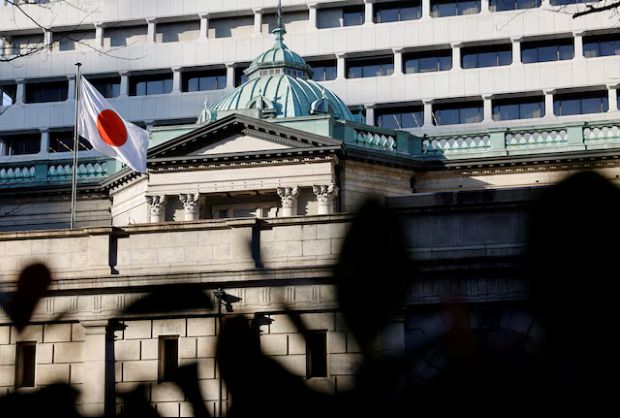
On Friday (19), the Bank of Japan increased its benchmark interest rate to 0.75%. While this remains far below rates in other major economies, it is the highest level in Japan — which for decades has used near-zero rates to battle deflation — since 1995. More rate increases are expected in the coming years.
The central bank’s decision to raise rates means the cost of servicing Japan’s public debt, the highest in the developed world, will become higher. Takaichi’s government just pushed through a $117 billion stimulus package, which includes items like subsidies for households, more money for Japan’s military, and investments in the semiconductor and shipbuilding industries.
More than half of that spending will be funded by issuing more bonds.
Most economists believe that Takaichi’s spending package will help put a floor under growth for Japan’s economy next year, helping to offset lingering negative impacts from US tariffs. The higher levies on exports led Japan’s economy to contract, for the first time in more than a year, in the July-to-September quarter.
BMI, a unit of the research and analytics provider Fitch Solutions, called Takaichi’s spending plan a “generous fiscal package” and projected that it would stimulate both private consumption and fixed investment. As a result of the stimulus, BMI raised its 2026 gross domestic product growth forecast to 1.4% from 0.7%.
Still, in financial markets, growing concerns that Takaichi’s expansionary policies will worsen Japan’s precarious fiscal health — public debt is more than twice the size of Japan’s economy — have triggered a sell-off in government bonds. This has pushed long-term yields on the bonds to their highest level in nearly two decades.
The volatile mix of growing debt, higher interest rates, aggressive fiscal spending and tariffs make the path forward for Japan’s economy difficult to predict, according to George Goncalves, a head strategist at the Japanese bank MUFG.
“Competing forces are generating uncertainty,” he said, adding that historically, when only one lever of policy was changed, “it was much clearer to understand the implications.”
The primary concern rests on whether Tokyo’s fiscal ambitions can coexist with a sustainable management of debt loads, Goncalves said. “The saving grace for Japan is that they have had rates near zero — or even negative — forever.”
This is one reason Takaichi has traditionally championed easy monetary policy.
A disciple of Abenomics, the economic policies championed by former Prime Minister Shinzo Abe, she has argued that low rates encourage greater borrowing, spending and investment, while keeping the cost of servicing the debt from stimulus packages manageable. Takaichi once called the notion of the Bank of Japan raising rates “stupid.”
Since increasing interest rates to 0.5% in January, the central bank has held borrowing costs steady. More recently, however, the Bank of Japan and Takaichi’s administration have shifted focus to the impact that prolonged low rates are having on Japan’s weakened yen.
The large gap in rates between Japan and other major economies is among the factors that have contributed to a sustained depreciation of the yen. A weak yen, while bolstering Japan’s exports, increases import costs. That, in turn, worsens inflation, which has remained above the central bank’s 2% target for 44 consecutive months, according to data released Friday.
Sustained inflation has stifled consumer spending, with prices rising faster than wages each month this year.
The central bank’s latest rate increase is widely viewed as an attempt to narrow the interest rate differential, support the yen and ultimately help cool inflation and give wages a chance to keep up. The hope of the central bank and the Takaichi administration is that via this circuitous route, a rate increase will help bolster consumer spending.
Still, lifting rates primarily to counter yen weakness presents risks, said Stefan Angrick, a senior economist at Moody’s Analytics. “Tighter policy also crimps business and consumer spending,” he wrote in a recent note.
Takayasu Kudo, a senior Japanese economist at Bank of America, said he believed that since Japan hadn’t experienced interest rates this high in three decades, the Bank of Japan would have to proceed cautiously.
“The strategy we expect them to follow is a gradual increase in rates, followed by a time lag to observe the reaction of the economy and prices,” Kudo said.
-New York Times

Comments are closed, but trackbacks and pingbacks are open.