

Cyclone Ditwah leaves Sri Lanka’s livestock industry reeling: Claims millions of birds and thousands of cattle

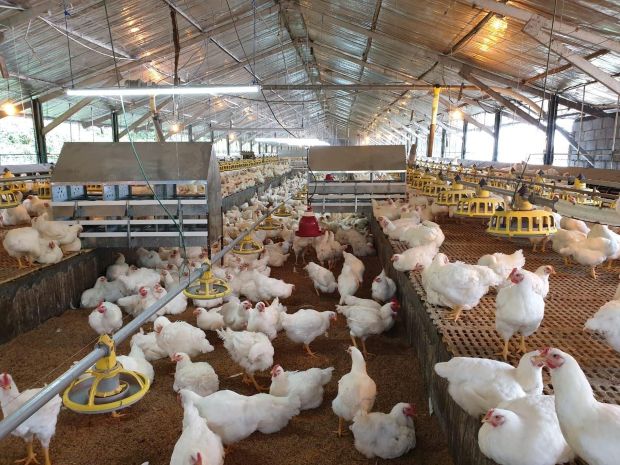
COLOMBO – Sri Lanka’s livestock and poultry sectors have suffered severe devastation in the wake of Cyclone Ditwah, with tens of thousands of animals killed and egg production plunging sharply, officials said.
Director of the Department of Animal Husbandry and Health, K. K. Sarath, told local media that the cyclone had killed 35,000 cattle and 2,000 pigs, dealing a major blow to farming communities across the island. Sri Lanka’s cattle population is estimated at around two million, he said.
The pig farming sector has been particularly hard-hit, coming at a time when it was only beginning to recover from the African Swine Fever outbreak that caused widespread losses in recent years.
While cattle and pigs suffered large-scale casualties, the most extensive impact was recorded in the poultry sector, the country’s most organized and widely distributed livestock industry. According to Sarath, the storm wiped out around 500,000-layer chicks and 1.4 to 1.5 million broiler chicks in commercial farms alone. The number of birds lost in small home-based, or cottage poultry units remains unknown.
Sri Lanka’s daily egg output has dropped by nearly 30% following the destruction of hundreds of thousands of layer chickens, said Ajith Gunasekera, President of the All Island Poultry Association.
The country typically consumes about 900,000 eggs a day, though recent months had seen production rise to around 1.1 million eggs, easing prices in the domestic market. Prior to the cyclone, retail egg prices hovered between Rs 22 and Rs 28, with farmgate prices at Rs 21 to 22.
However, high production costs, driven largely by expensive locally sourced maize due to import restrictions, had already pushed the cost of producing an egg to around Rs 28. With the cyclone’s impact and the resulting supply crunch, retail prices have now surged to Rs 43 to 45.
Gunasekera noted that the 500,000 affected layer birds were at varying stages of growth, and it takes approximately five months for a chicken to mature and begin laying. Current daily egg output is now estimated at just 600,000, he added.
Flooding disrupted feed deliveries to many operational farms, leading to further production declines. “When feed supplies fall, the chicken’s body automatically conserves calcium by reducing egg production,” Gunasekera explained. “Power outages also reduce laying, as poultry require consistent light cycles.”
Though Sri Lanka had recently been experiencing slight overproduction, the cyclone has abruptly reversed the trend. Reduced local tourism and cancellations of events have also contributed to weaker demand, Gunasekera said.
Despite the setback, farmers who survived the disaster are already preparing to restock and expand operations, supported in part by higher selling prices.
Day-old chick prices, which had crashed to around Rs 50 during the floods, prompting some farms to cull chicks, have now rebounded to Rs 400 to 450 for layers and Rs 275 to 350 for broilers, he said.
Sri Lanka also lost 1.4 to 1.5 million broiler chickens, which typically have a short 35-day production cycle, meaning the sector could recover relatively quickly if feed supplies and other inputs stabilise.
Gunasekera warned, however, that soaring maize prices, now around Rs 200 per kilogram, compared to about Rs 120 per kilogram for imported maize with taxes, pose a major challenge to restoring stable and affordable production.
To support recovery, the government has announced compensation of Rs 200,000 per farm affected by the cyclone. However, industry stakeholders say broader support, particularly feed subsidies and easing of import restrictions, may be essential to stabilize production and prevent further price volatility in the coming months.
-ENCL

Comments are closed, but trackbacks and pingbacks are open.