

Stop rebuilding and start building resilience

By Ananda Gamage
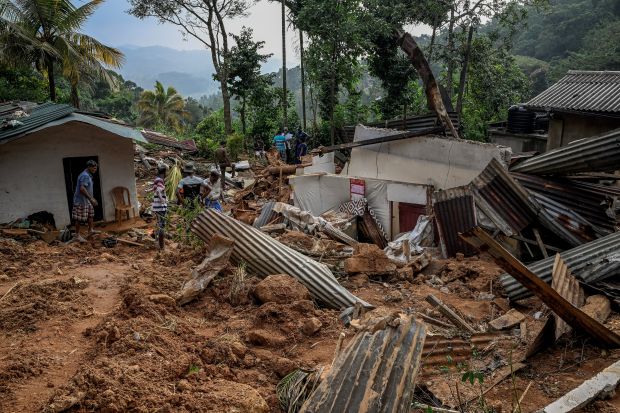
Sri Lanka has endured a relentless series of climate-driven disasters over the past decade, floods that submerged entire towns, landslides that swept away villages and homes, cyclones that uprooted livelihoods, and droughts that parched farmlands. Cyclone Ditwah exposed the country’s fragile infrastructure and underscored how unprepared Sri Lanka remains for intensifying climate extremes. A deeper truth which the crisis uncovered, and we have yet to confront is that our development patterns are fundamentally misaligned with the realities of the planet.
Yet, in every crisis lies an opportunity. As the nation embarks on the next phase of post-disaster redevelopment, the question before us is no longer simply how to rebuild what was lost. It is how to reshape our future. Sri Lanka now has the chance to shift from reactive fixes to an integrated resilient redevelopment, a forward-looking approach that strengthens communities, protects ecosystems, and prepares the country for the climate that is already here.
The Cost of Rebuilding the Same Vulnerabilities
The severe impacts seen in many districts are not merely “natural disasters” they are disasters shaped by human decisions. Several structural issues have amplified the damage:
- Construction in high-risk landslides and flood zones
- Weak enforcement of land-use, planning and building regulations
- Encroachment into wetlands, riverbanks, and watershed areas
- Outdated spatial planning that ignores climate science
- Rapid unplanned development without environmental safeguards
When land is mismanaged, water finds its own path. When steep slopes are built on without proper engineering, they eventually give way. When wetlands are filled, cities flood. These patterns will continue unless we change how we plan our settlements.
A New Approach: Integrated Resilient Redevelopment
Rebuilding after a disaster must go beyond restoring what existed. It must create safer, greener, and more climate-adaptive environments.
An integrated approach can help Sri Lanka:
- Reduce future disaster losses
- Strengthening community resilience
- Balance development with environmental protection
- Build public trust through transparent, science-based planning
This requires collaboration between national agencies, provincial and local authorities, professionals, and communities, all guided by a unified, risk-informed vision.
Update the National Physical Plan — Immediately
Sri Lanka’s National Physical Plan, currently in draft form, must be urgently revised with updated disaster and climate risk data. The revised plan should:
- Identify multi-hazard zones across the country
- Map high-risk slopes, flood plains, coastal vulnerability areas
- Protect river buffers, canal reservations, and critical watersheds
- Ensure that all future development follows climate-sensitive land-use norms
A strong National Physical Plan becomes the backbone for safe settlement planning, physical development, environmental conservation, and sustainable economic growth.
Stop Rebuilding in High-Risk Zones
One of the most important and politically challenging steps is ensuring that reconstruction does not repeat previous mistakes.
Immediate actions must include:
- Declaring riverbanks, canal reservations, drainage lines, wetlands, and steep slopes as no-build zones
- Strict enforcement against unauthorized structures and encroachments
- Providing safe temporary relocation for displaced families, with transparent criteria
- Using drones, GIS, and satellite data for real-time monitoring
Rebuilding homes in the same hazard-prone locations only creates new cycles of loss.
Establish a Strong National Building Code
Sri Lanka urgently needs a comprehensive national building code designed for climate resilience. This should include:
- Standards for slope stabilization and geotechnical safety
- Flood-resilient design requirements (raised structures, breakaway walls, drainage norms)
- Cyclone-resistant specifications
- Green building guidelines to promote energy efficiency
- Minimum social infrastructure standards for settlements
Such standards must be legally enforceable not mere guidelines.
Make Ecosystems Part of the Solution
Nature is one of the most powerful tools in climate resilience. Wetlands reduce floods. Forests stabilize slopes. Mangroves protect coastlines. Rivers need space to flow.
Integrated Resilient Redevelopment must therefore:
- Restore and protect wetlands, river buffers, and flood plains
- Reforest degraded hill slopes
- Rehabilitate canal networks and natural drainage lines
- Create green–blue corridors that absorb excess water
When nature is healthy, communities are safer. These safer areas can contribute better towards economic and social development.
Empower Local Communities
Long-term resilience cannot be engineered from Colombo alone. Communities must be active partners, not passive recipients.
This means:
- Co-designing relocation plans with affected families
- Building disaster literacy and preparedness at village level
- Using mobile apps for community reporting and early warnings
- Supporting local institutions to implement spatial plans effectively
Resilience grows stronger when it grows from the ground up.
Finance Resilience, Not Repetition
Climate-resilient redevelopment requires sustainable financing and stronger accountability. Sri Lanka can draw on:
- Global climate funds
- Resilience bonds
- Incentives for safe construction practices
- Public-private partnerships for green infrastructure
Investing in resilience today saves billions in future disaster losses.
The Future We Build Now Will Define Our Next Generation
Sri Lanka is at a crucial conjuncture. The choices made in the coming months will shape how safe our cities are, how secure our communities feel, and how well our economy adapts to a changing climate.
In this critical moment, professionals across town planning, engineering, architecture, disaster management, social science and environmental sciences must embrace a new mindset. One that is grounded in field realities, open to unlearning outdated practices, and committed to relearning approaches shaped by climate science and community needs. Technical expertise alone is no longer enough. Effective post-disaster redevelopment demands humility, empathy, and a willingness to listen. Professionals must adopt inclusive and consultative processes that bring local knowledge, community experiences, and multi-disciplinary perspectives into an integration manner towards decision making. By working with people rather than imposing solutions on them, professionals can help design safer, more resilient, and socially just redevelopment pathways that truly reflect the aspirations of those most affected.
If redevelopment is rushed and driven by old assumptions, ignoring environmental safeguards, community voices, and the realities revealed by Cyclone Ditwah, Sri Lanka will merely rebuild the same risks and repeat the same tragedies. But if we root our recovery in climate science, sound urban planning and a new professional mindset grounded in humility, continuous learning, and inclusive collaboration, disaster recovery can transform into long-term resilience. With a holistic approach, Sri Lanka can turn this moment into a blueprint for a safer, more sustainable, and more future-ready nation.
This is not only about building back better — it is about building forward smarter.
-Ananda Gamage, an Engineer and Town Planner with over 35 years of experience, is a former senior lecturer at the University of Moratuwa and a fellow of the Institute of Town Planners, Sri Lanka (ITPSL). He previously served as the Project Director of the Local Government Enhancement Sector Project – Pura Neguma, under the Ministry of Local Government and Provincial Council and as the Director (City Planning) and Chief City Planner of the Colombo Municipal Council from 2007 – 2012. This article was originally featured as Factum Perspective on factum.lk

Comments are closed, but trackbacks and pingbacks are open.